



Welcome
This website provides research insights and interpretations about Asia Pacific’s Industry Transitions. The content aims to support decision-makers in business, finance, policy and the broader community to successfully navigate major global transitions that shape the future of sustainable economic development.
Major transitions we focus on include:



Latest research and posts
- Asia-Pacific’s Green Economic Transitions at the Intersection of Cleantech Trade, Investment and Utilization 2015-2026
 This new in-depth analysis of Asia-Pacific green economic transition analyzes cleantech and green trade, investment in manufacturing and utilization of solar, wind, batteries, New Energy Vehicles (NEVs) and related equipment. It is co-written by Christoph Nedopil (UQ), Michael Davidson (UCSD), Jieune O’Neill (UCSD), Andres Perez-Corsini (UCSD), Sandy Qian (UCSD), and Tong Niu (UQ). Highlights of
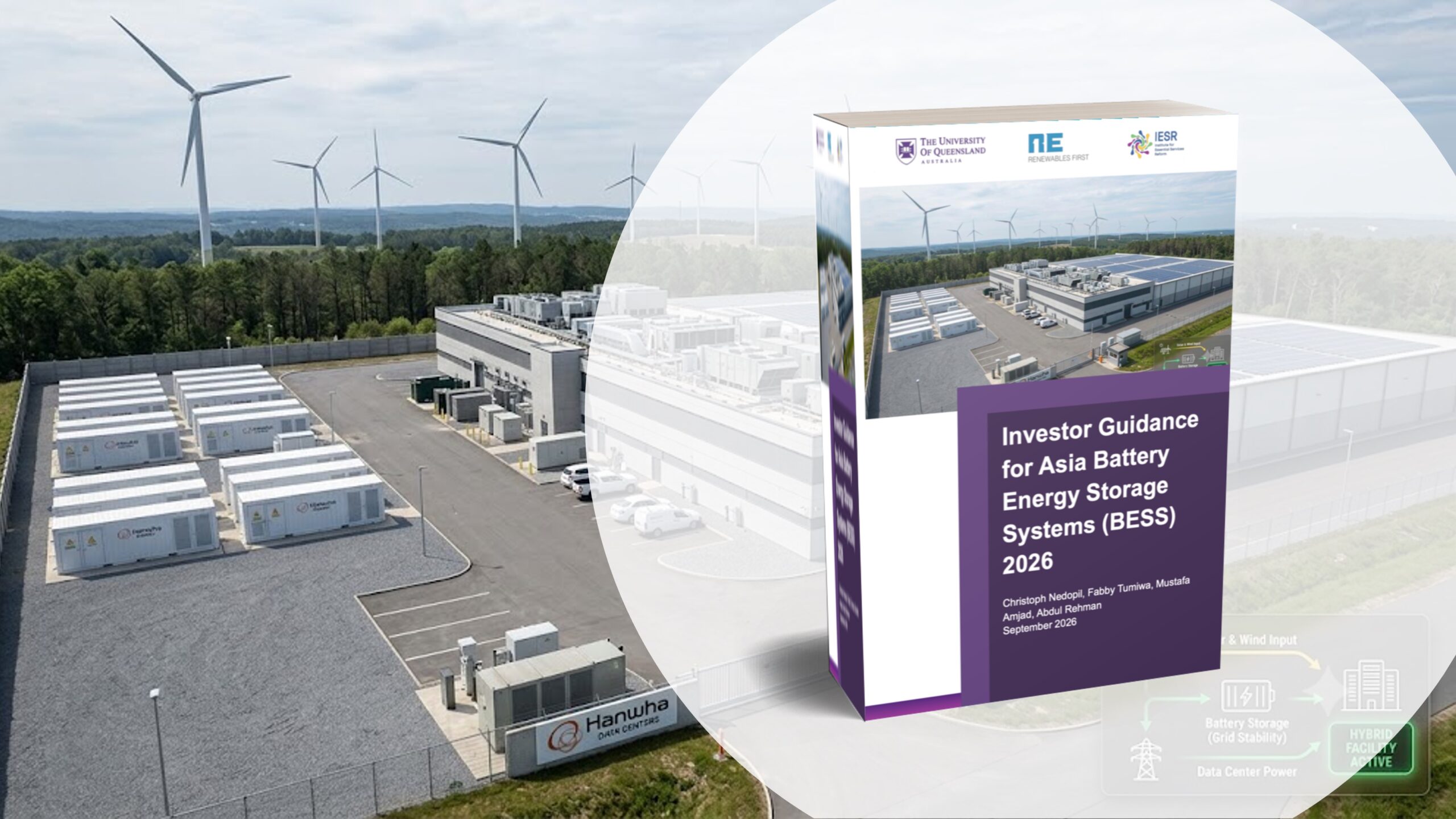
- Investor Guidance for Asia Battery Energy Storage System (BESS) 2026In this in-depth report, we analyze the 2026 investment landscape of Asia’s battery energy storage system (BESS). Executive Summary Battery energy storage systems (BESS) are becoming a core part of Asia’s power-sector transition. Growing solar and wind capacity is increasing demand for flexible capacity, frequency control and reliable supply, while battery costs continue to fall.
- China’s economy is changing rapidly. It’s no longer Australia’s easy export marketFor decades, China’s market of 1.4 billion people and extraordinary economic growth gave Australian exporters seemingly endless opportunities. The prevailing assumption was that China’s growing middle class would: build more infrastructure requiring steel consume more electricity using coal and send their children overseas for education. But China has been transitioning rapidly from the manufacturing



People
The blog is the personal blog of Christoph NEDOPIL WANG

Christoph is Professor at University of Queensland in Brisbane, Australia. He is also a Visiting Professor at FISF Fudan University, Shanghai, and a Professorial Research Associate at SOAS University of London.
Christoph’s work focuses on green industry transitions in the Asia-Pacific region. He regularly provides advisory services and capacity building to governments, financial institutions, enterprises, and civil society on green finance, corporate governance and transition leadership.
He is the lead author of the UNDP SDG Finance Taxonomy, the Innovative Climate Finance Solutions report for the G20 in Indonesia, and the Green Development Guidance of the BRI Green Development Coalition under the Chinese Ministry of Ecology and Environment. He has further authored four books with translations in several languages and published articles in Science and other leading academic journals. Christoph is quoted regularly in Financial Times, The Economist, Reuters, Bloomberg, and other major outlets.
Before joining UQ, he served as Director of the Griffith Asia Institute at Griffith University, as the Founding Director of the Green Finance & Development Center and Associate Professor at the Fudan International School of Finance (FISF), Fudan University and previously as Founding Director for the Green BRI Center at the Central University of Economics in Beijing. He also worked for more than a decade with the World Bank in over 15 countries and served as a Director at the German development agency GIZ.
Christoph holds a Master of Engineering and a PhD in Economics from the Technical University Berlin, as well as a Master of Public Administration from Harvard Kennedy School.