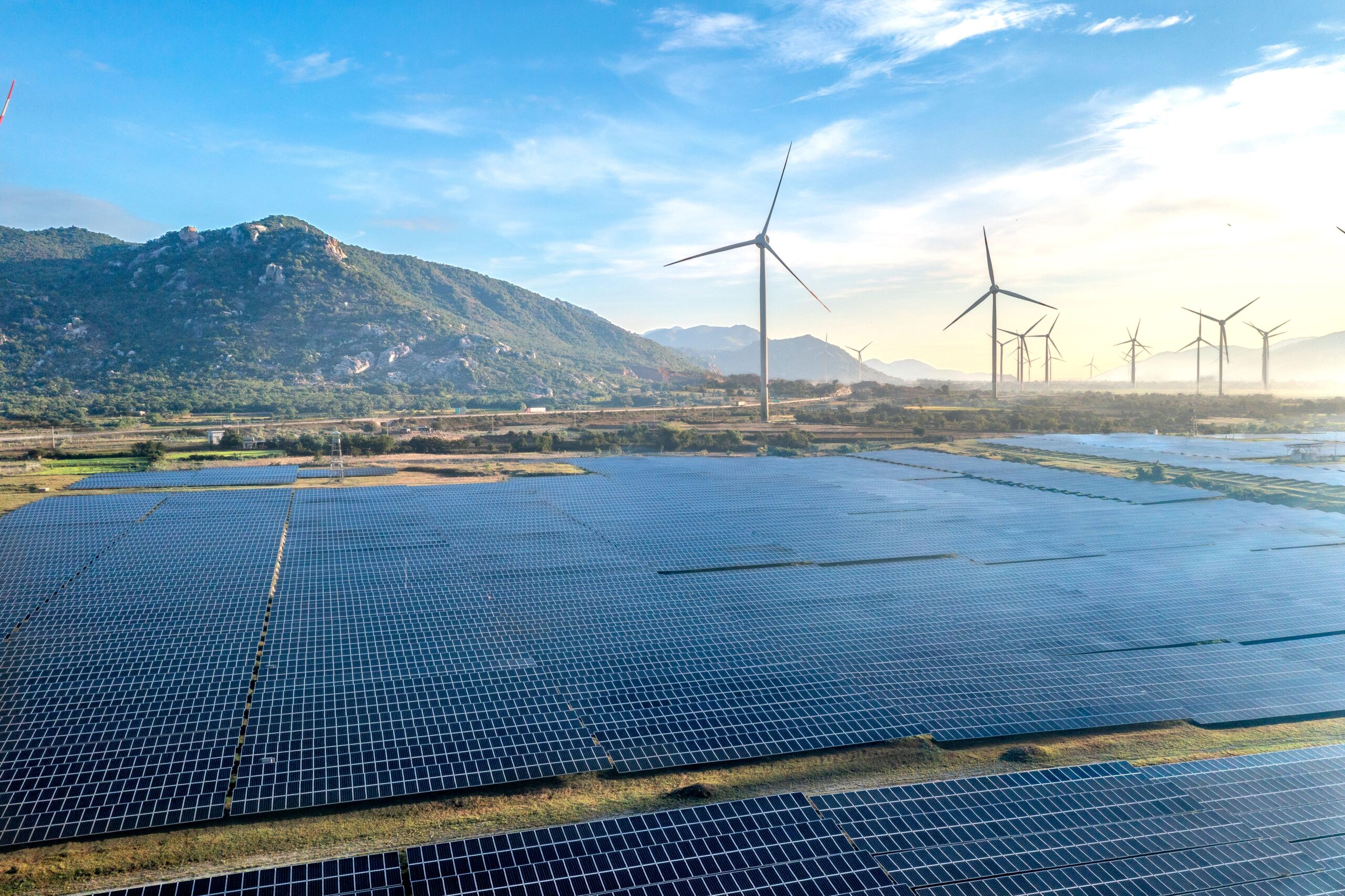
The Asia-Pacific region will define the pace and shape of the global energy transition. It is where energy demand is growing fastest, fossil fuel infrastructure remains entrenched, and geopolitical competition over clean technologies and resources is intensifying.
To this end, the work supports governments, state-owned enterprises, financial institutions, and industry leaders in this transition through rigorous, evidence-based, strategic, and non-partisan research and capacity building. Our ambition is to unlock opportunities in clean energy technology while transition from coal, to strengthen energy sector governance, and to support just and rapid transformation of energy intense industries toward net-zero emissions.
In doing so, we strengthen collaboration of experts and policy makers in support of economic stability and security in the Asia-Pacific region.
Focus Areas
The research, engagement and capacity building supporting Asia’s accelerated green energy transition centres on five pillars for the 2026-2030 period
- Optimizing green energy trade and local green manufacturing investment:
Accelerating Asia’s energy transition requires investment in electricity generation and localized green manufacturing to secure political buy-in and address just transition considerations.
Project example: Accelerating Asia’s Decarbonization through Trade and Investment Policies – in collaboration with the University of California San Diego (UCSD) - Energy finance and capability and collaboration:
Collaboration for Asia’s green energy transition among stakeholders including policy and finance, developers and communities are paramount to meet Asia’s green energy transition goals addressing finance, energy policy, stakeholders trust. Significant gaps exist in all dimensions, such as in attracting finance, due to insufficient and non-harmonized green finance standards as well as capacity gaps in collaborating with project developers – and in particular Chinese project developers.
Project example: Green Energy Network Asia (GEN-A), a network of decision-makers to accelerate Asia’s green energy transition (Phase 2, 2025-2026) - Advancing grid and energy storage investments:
Most renewable energy sources require network firming and flexibility to overcome intermittency issues and require investments in grid flexibility and interconnectivity as well as energy storage systems. Mobilizing finance for grid and storage is of great importance yet often fails due to lack of business models across Asian economies.
Project example: Green Energy Network Asia (GEN-A), a network for Asian decision-makers to accelerate the green energy transition (Phase 3, 2026-2027, tbc) - Supporting state-owned power companies’ (SOPCs) green transition:
National utilities dominate electricity generation across the region and are lagging in the green transition despite clear evidence of the advantageous economics of green energy over fossil fuels. Capacity and governance issues mobilizing green finance while addressing climate and transition risks is of paramount importance.
Project example: Green Finance For Asian State-Owned Enterprises (Asian Development Bank (ADB) - Energy system decarbonization through coal-to-green transitions:
Coal power generation is the backbone of Asia’s energy system and is – despite progress in green energy – continuing to be expanded across most Asian economies. Identifying and progressing pilots for early coal phase-down remains pivotal in proving that such a progress is possible. China is a particularly important partner as it holds about 40GW of partly underperforming coal assets in the region, but the engagement must also include international funders (such as ADB with significant coal assets in the region).
Project examples: Debt for development swaps (including coal retirement in Pakistan) for UNDP , Financing early phase-out of coal fired power plants in Pakistan and Vietnam (with Climate Smart Ventures, Pakistan China Institute)