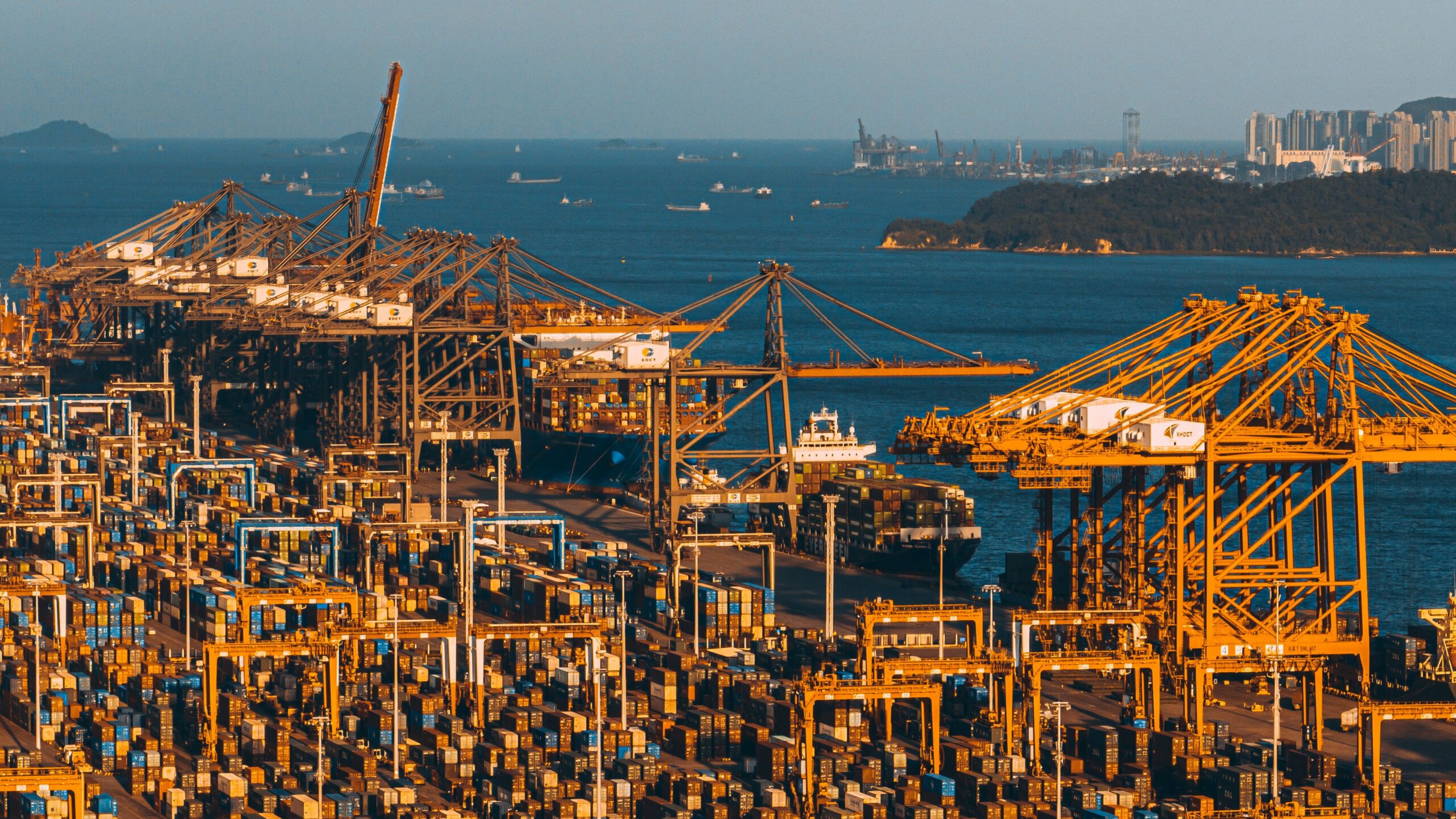
The role of China as a supplier of finance, technology and trade opportunities in Asia-Pacific is of great significance for global value chains. The research addresses:
- China’s Belt and Road Initiative (BRI) and its role in regional development: The Belt and Road Initiative (BRI) is China’s main international cooperation and economic strategy. The BRI is also known as the “One Belt One Road” (OBOR), the “Silk Road Economic Belt and the 21st-century Maritime Silk Road” or just the “New Silk Road”. Its Chinese name is 一带一路 (yi dai yi lu). It was announced by Chinese President Xi Jinping in Kazakhstan in October 2013.
Project example: China Belt and Road Initiative Investment Tracker - China-Australia iron and steel decarbonization partnerships: China and Australia need an iron and steel decarbonisation partnership to sustain the value of a deeply integrated industrial relationship: Australia supplies almost 60% of China’s iron ore imports, while China produces more than half the world’s steel—a sector responsible for around 7–9% of global emissions. Yet the transition threatens established trade: declining Chinese steel demand and increased scrap recycling could reduce ore consumption, while hydrogen-based production favours higher-grade feedstocks over much of Australia’s Pilbara ore, and green iron projects face high energy costs and substantial investment risks.
Project example: Australia-China Iron and Steel Decarbonization Dialogues (supported by the National Foundation for Australia China Relations, NFACR) - Cleantech trade and investment tracker: Emerging Asian economies aiming to green their economy and energy system therefore need to balance engagement with China and other international and domestic partners to strengthen investment in localized green energy manufacturing, strengthen the green energy transition that is cost effective, while also reducing China’s fossil-intense engagement. Examples include Indonesia with high-level ambitions for green electricity transition with continued coal engagement by China, Thailand with strong green manufacturing ambitions yet slow green transition, or Vietnam with strong green manufacturing capacity and an accelerating green electricity transition. Better understanding investment trends from China and other domestic and international partners in green economy is thus paramount for evaluating differences and opportunities in national settings that allow Asian countries and in a broader sense Global South countries to leapfrog the green energy transition.